A church shaped by Venice’s connections
Saint Mark’s Basilica is a working place of worship as well as a major architectural landmark. Its identity is closely connected with Saint Mark, Venice’s patron saint, and with the city’s historic links across the eastern Mediterranean. The present church took shape from the eleventh century, with substantial additions and alterations over the centuries that followed.
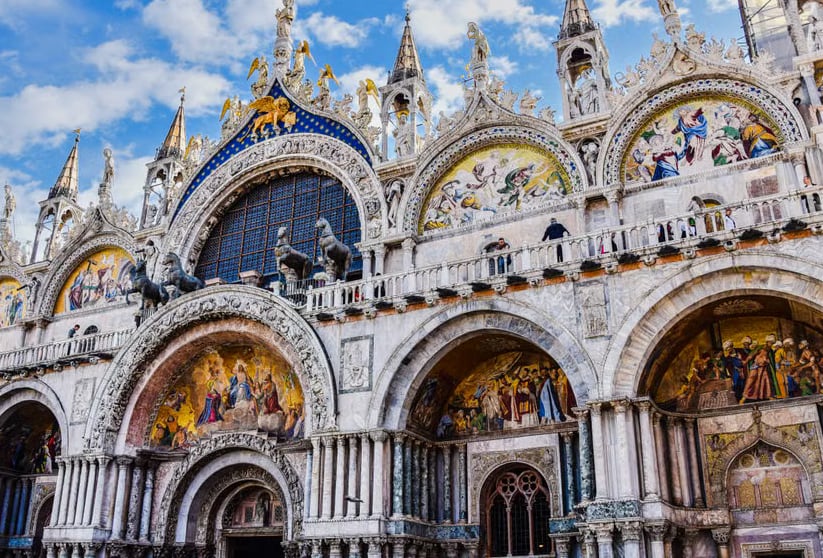
Rather than expecting one consistent style, look for a meeting of traditions. The domes and centralised composition evoke Byzantine church architecture; the façade combines rounded arches, elaborate sculptural decoration and later Gothic details. Its richness is part of the story of Venice as a trading and maritime city.
Three things to notice
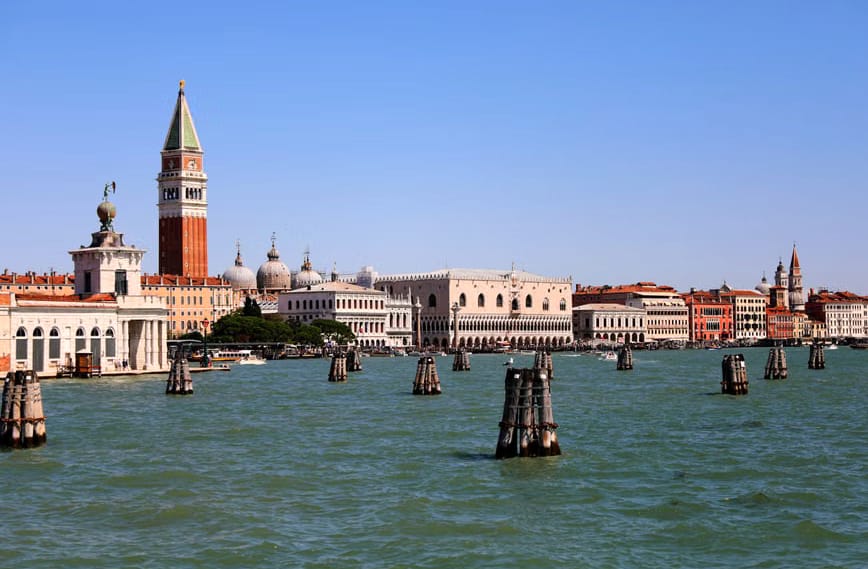
- The overall silhouette. Step back into the square to see how the domes rise above the layered façade. The campanile is a separate structure, not a tower attached to the church.
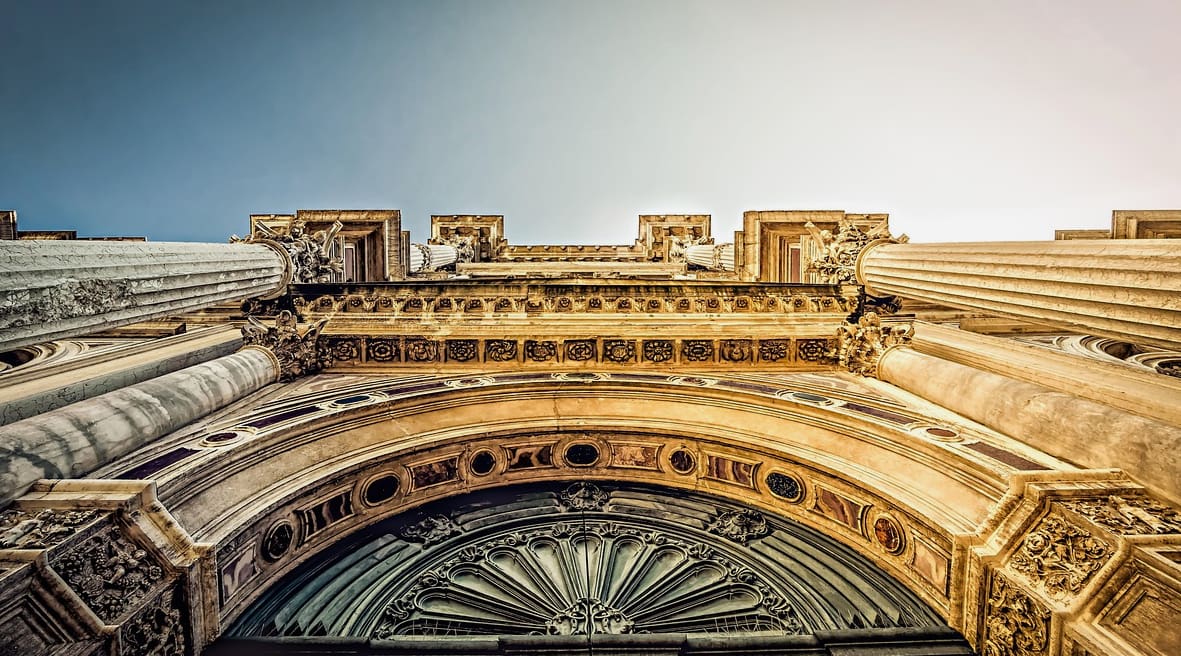
- The changing stone. Nearer the entrance, look at the different colours of marble and the variety of columns. Materials, patterns and reused elements make the surface unusually varied.
- The gold-ground mosaics. Inside, mosaic imagery extends across vaults and domes. Allow your eyes to adjust to the light, then look at how the images follow the architecture rather than treating them as isolated pictures.
The horses and the view above the square
The bronze horses are among the basilica’s best-known works. The exterior group consists of replicas; the historic originals are associated with the museum visit. If seeing them is important to you, check the current museum admission arrangements rather than assuming that every church ticket includes that area.
Our suggestion: first spend a few quiet minutes observing the exterior without a camera. Choose one detail to look for again inside. This makes a more rewarding visit than trying to identify everything at once.
For the basilica’s own historical and visitor information, consult the official Saint Mark’s Basilica website. This guide is independent of the basilica.